
From Leaving to Living
Through four distinct scenes, B.’s story traces a journey from loss and fear to safety and hope. Each place marks a step in her transformation, from darkness toward light.
STORIES FROM GREECE
6/13/20262 min read
The first part is Afghanistan, her country of origin. It is depicted in dark tones, with a crying face at its center. This image carries multiple meanings. It reflects the pain of leaving home, but also the reality she experienced there. Under Taliban rule, the lives of many women are marked by restriction and loss of freedom. In this context, the tears are not only personal; they are also collective, connected to a broader experience of limitation and hardship.
The second section represents Iran. The face is still sad, but no longer crying. What stands out here is a sense of hostility. In the painting, a figure appears shouting at others to leave, pushing them back toward where they came from. This moment captures the feeling of not being welcome, of existing in a space where presence is questioned and belonging is denied.
In the third part, Türkiye appears. The colours begin to soften, becoming lighter, yet the face remains marked by sadness. This stage reflects a continuation of uncertainty, where the journey has not yet reached stability. It is a space in between, where movement continues but resolution has not yet been found.
Finally, the painting arrives in Greece. Here, everything changes. The colours open into brightness. A smiling face replaces the sadness of the previous scenes. The presence of the sun and elements of nature create a sense of calm and renewal. Two figures stand together, holding hands, a simple but powerful image of connection, safety, and belonging.
What makes this story especially striking is its clarity. Each section does not stand alone; it leads into the next. The emotional journey moves gradually, from darkness to light, from isolation to connection.
B.’s painting reminds us that migration is not a single moment, but a series of experiences that leave their mark over time. It shows how places can shape emotions, and how, even after difficulty and rejection, the possibility of peace and happiness can emerge.
In the end, her story is not only about what she left behind, but about what she has found: a space where she can begin again, where light replaces shadow, and where holding another person’s hand becomes a sign that she is no longer alone.
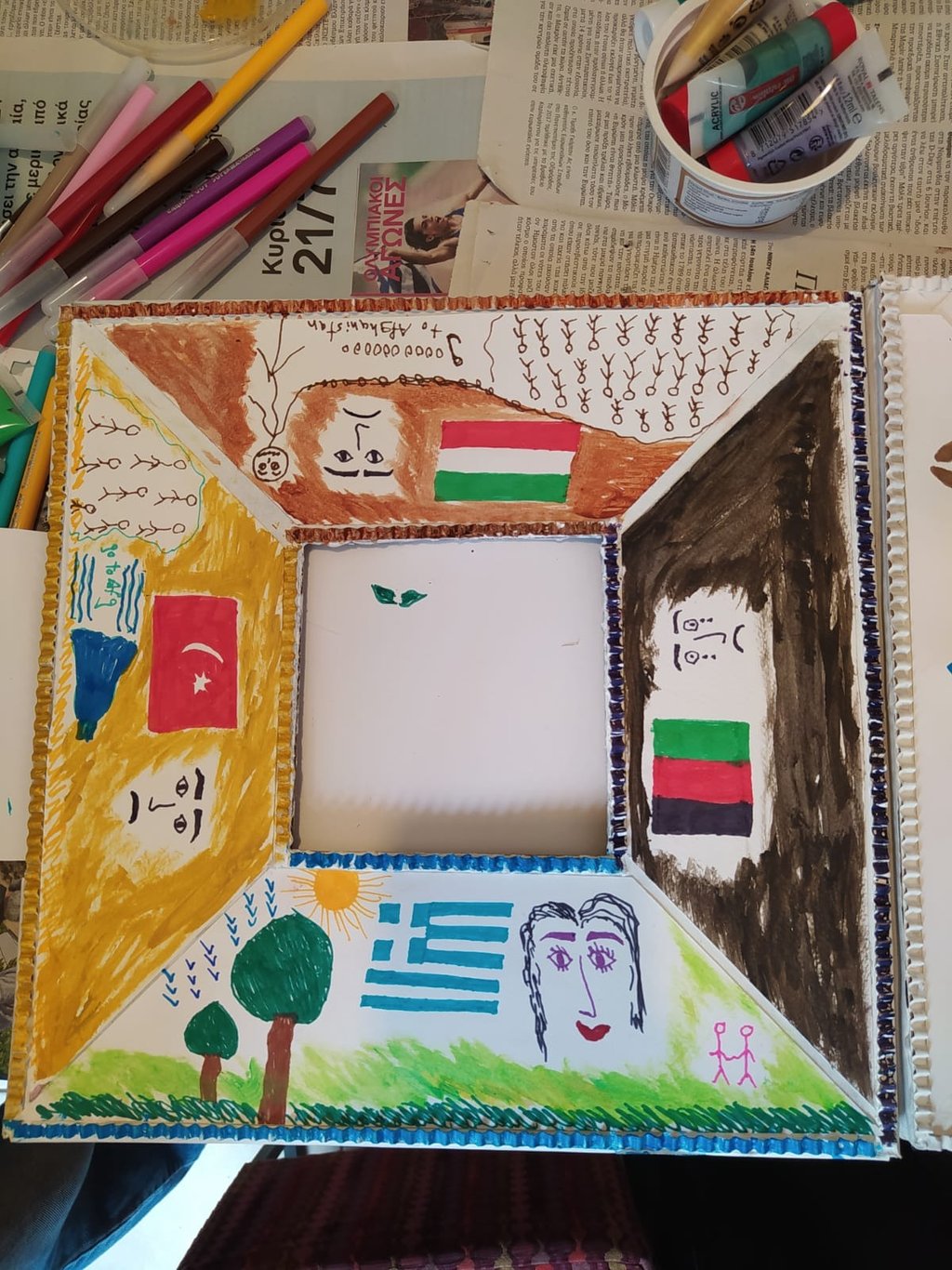
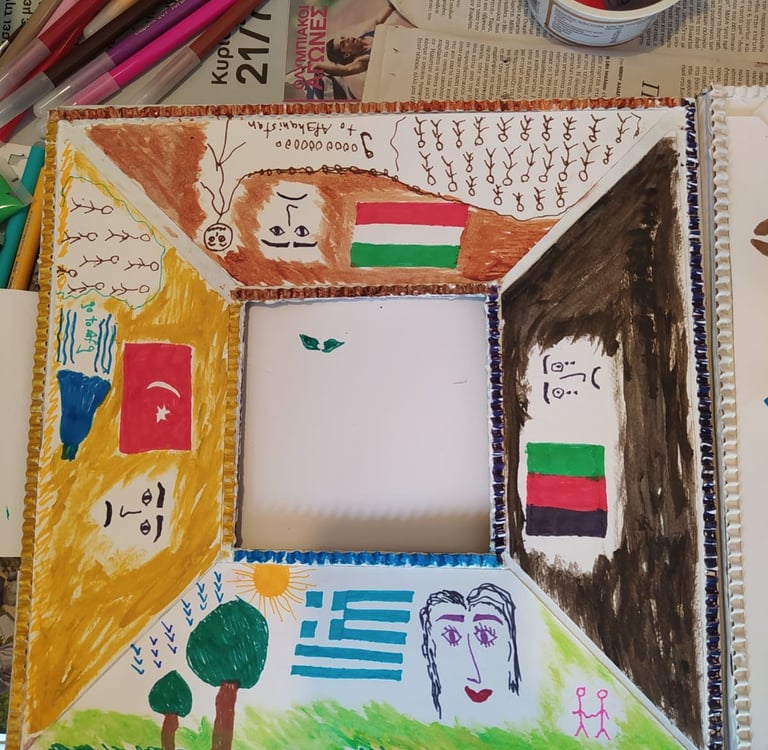
B.’s painting unfolds as a journey in four parts, each one representing a country that has shaped her life and identity. Together, these sections form a visual narrative of movement, emotion, and transformation.
HERS
Funded by the European Union. Views and opinions expressed are however those of the author(s) only and do not necessarily reflect those of the European Union or the European Education and Culture Executive Agency (EACEA). Neither the European Union nor EACEA can be held responsible for them.
Contact
hers@odyssea.com
© 2024. All rights reserved.