
Patterns of Home
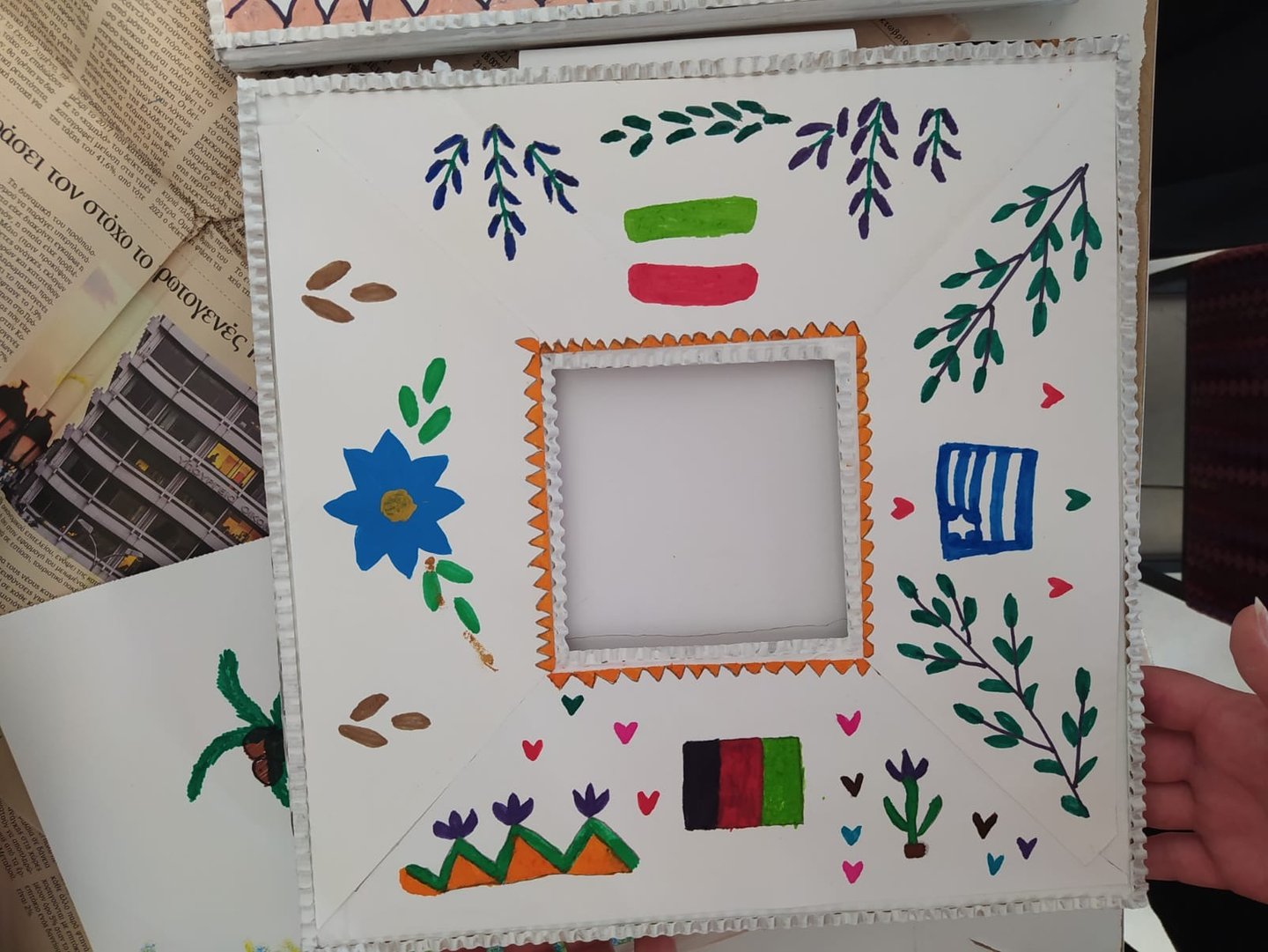
Through embroidery and floral patterns, H. preserves the memory and beauty of her Afghan heritage. Her hands carry tradition across borders, stitching together past and present in her new life in Greece.
STORIES FROM GREECE
6/13/20261 min read
For H., this practice carries an additional meaning. Her life has unfolded across multiple places, with several stops between Afghanistan and Greece. These movements have shaped her story, creating a sense of distance, but also of continuity. Through embroidery, she gathers these fragments together..
Her art reminds us that cultural heritage is not only something preserved in museums or archives. It lives in the hands of those who practice it, in the patience of repetition, in the quiet act of making. Through her painting, H. does not simply remember where she comes from. She actively keeps it alive, allowing it to take root in a new place.
In this way, her story is not only about migration. It is about continuity. About how something as delicate as a thread can carry the strength of a whole history, and how, through care and dedication, it can continue to flourish across borders.
H.’s story is one of quiet continuity, where memory is preserved not through words, but through patterns, colors, and the careful movement of her hands. Originally from Afghanistan and now living in Greece, she carries her cultural heritage with her through the art of embroidery, a practice that connects her past to her present.
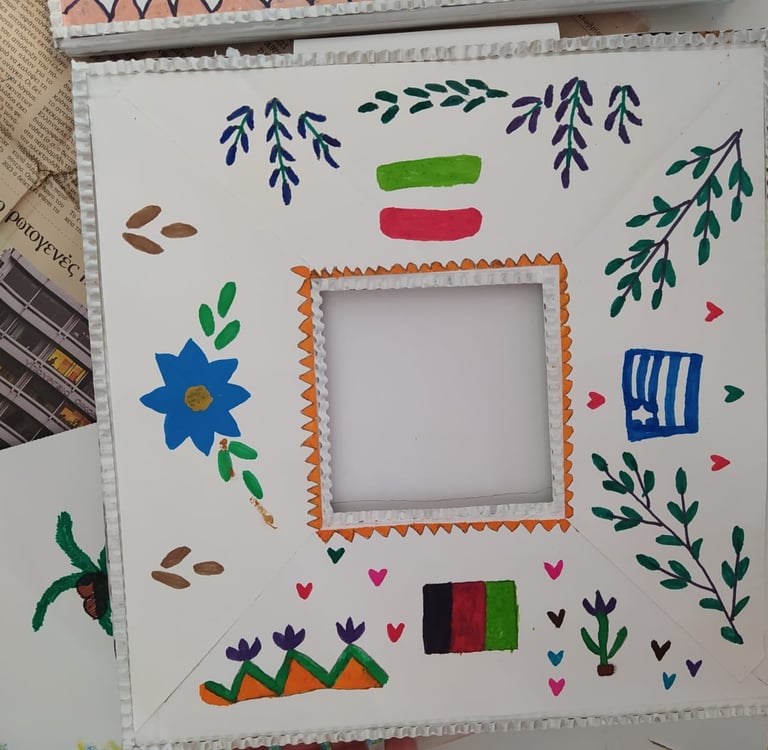
What she creates is more than decoration. The floral patterns she embroiders — inspired by traditional Afghan tablecloths, curtains, and textiles — are part of a living cultural language. Roses, tulips, and flowing vines appear again and again, not only as aesthetic choices, but as symbols deeply rooted in Afghan culture. They represent beauty, hope, and resilience, and reflect a long-standing connection to nature and to the rhythms of life.
In Afghanistan, such patterns are found in carpets, clothing, and everyday objects. They accompany important moments, from daily routines to celebrations, including weddings, where embroidered garments express care, identity, and belonging. Over generations, these designs have been passed down, not as fixed templates, but as evolving expressions of memory and skill.
HERS
Funded by the European Union. Views and opinions expressed are however those of the author(s) only and do not necessarily reflect those of the European Union or the European Education and Culture Executive Agency (EACEA). Neither the European Union nor EACEA can be held responsible for them.
Contact
hers@odyssea.com
© 2024. All rights reserved.