The Castle of Memory
At the heart of S.’s story stands a village castle in Bafan, Cameroon, a symbol of unity, memory, and belonging. Through childhood memories and cultural heritage, she traces how place shapes identity across generations.
STORIES FROM GREECE
6/13/20262 min read
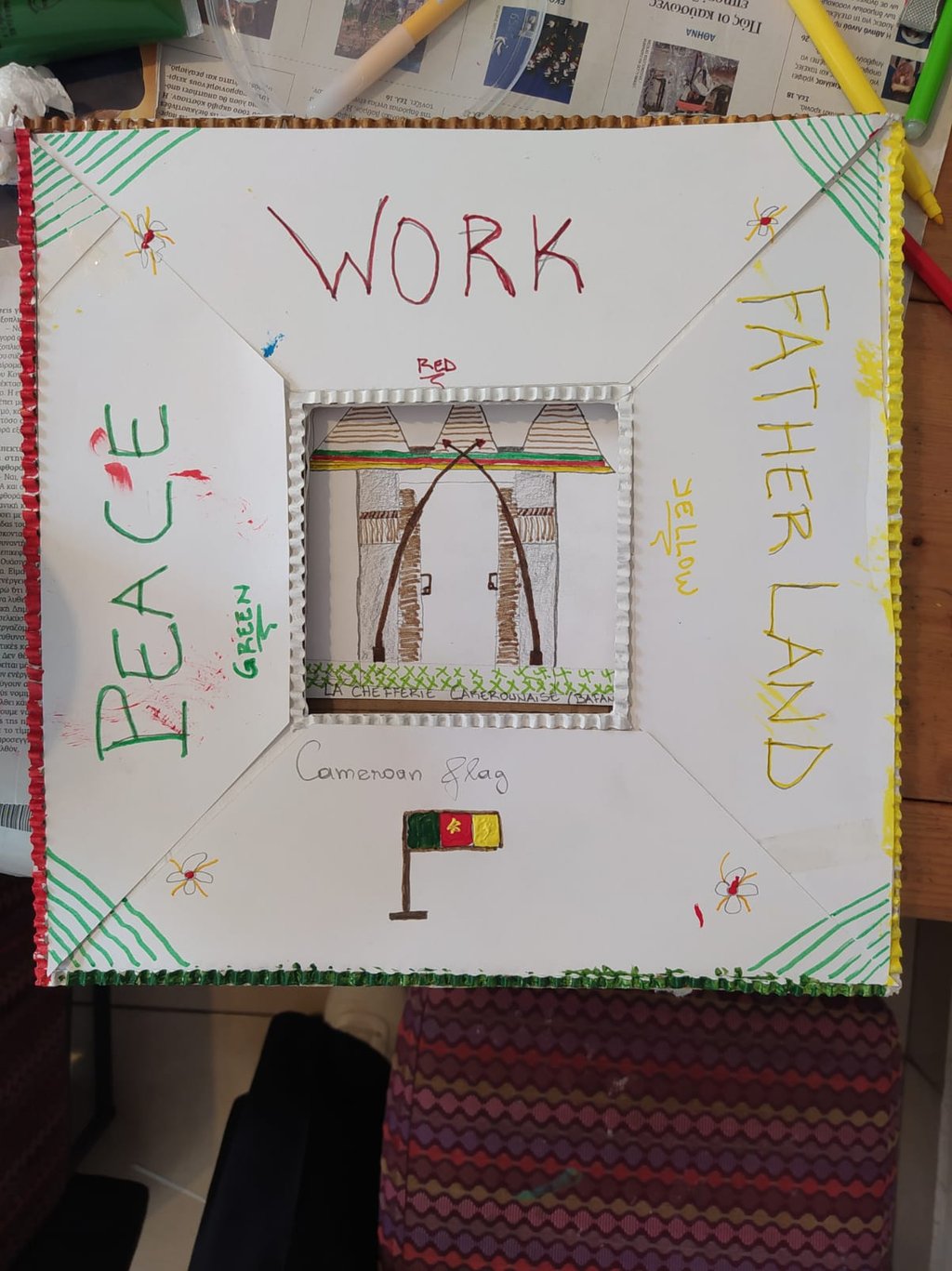
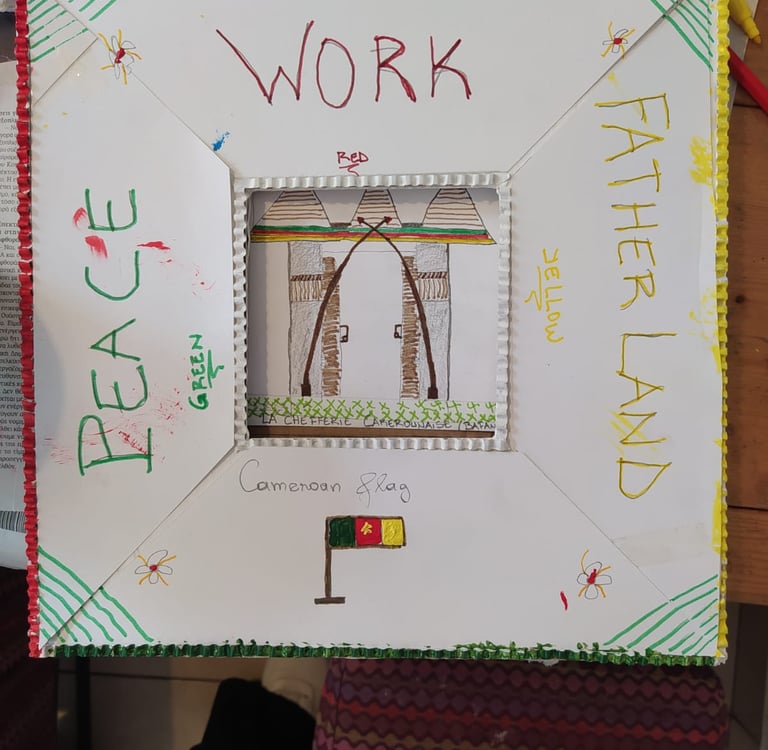
S.’s story is deeply rooted in her home country, Cameroon, and in the village of Bafan, where her earliest memories were shaped. At the centre of her painting stands a castle located at the entrance of the village — a powerful local symbol of history, identity, and collective memory.
This castle is more than a structure. It represents a shared sense of belonging for the community. In front of it, two arches cross, symbolising unity and connection. Decorated with the colours of the national flag, the monument carries meaning that goes far beyond decoration. It reflects a history of openness, welcome, and togetherness. The moving bridges of the castle were traditionally left open, inviting everyone in and reinforcing its role as a place of gathering rather than separation.
For S., this place is also deeply personal. She remembers playing around the castle as a child, alongside other children from her village, a continuity of generations that links past and present. These memories are not only individual; they are shared, part of a collective childhood experienced by many who grew up in the same space.
Around the drawing of the castle, she also includes Cameroon’s national motto: “Peace, Work, Fatherland.” These three words are each connected to one of the colours of the flag — green, red, and yellow — creating a visual and symbolic link between values, identity, and national belonging.
In her painting, the castle is placed at the centre, highlighting its importance not only as a physical landmark, but as an emotional and cultural anchor. It represents the intersection between personal memory and communal identity, between childhood experience and cultural heritage.
Her story reminds us that cultural heritage is not only found in grand histories or distant archives. It also lives in the everyday places where people grow up, in the spaces where communities gather, and in the memories that continue to shape identity long after childhood has passed.
HERS
Funded by the European Union. Views and opinions expressed are however those of the author(s) only and do not necessarily reflect those of the European Union or the European Education and Culture Executive Agency (EACEA). Neither the European Union nor EACEA can be held responsible for them.
Contact
hers@odyssea.com
© 2024. All rights reserved.